|
|||||||||||||||||||||||||||||||||||||
 |
 |
||||||||||||||||||||||||||||||||||||
 |
"A colloquial translation with a Southern accent" |
||||||||||||||||||||||||||||||||||||
|
|
|||||||||||||||||||||||||||||||||||||
|
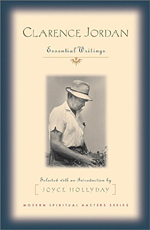
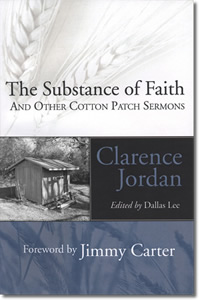
Both a Biblical scholar and a prophetic man of action, Clarence Jordan lived out the New Testament in the soil of rural Georgia. A visionary during the struggle for the civil rights of all God's children, he founded an inter-racial community called Koinonia. On this farm, folks worked side-by-side to make a living, following Jesus - a radical concept fifty years ago. They experienced a great deal of opposition, even from those who followed the same Lord. This community still exists, Koinonia Partners, even though the visionary who started it died unexpectedly on October 29, 1969, at the age of fifty-seven. Clarence was a powerful preacher - "direct, Bible-centered, and sternly contemporary," as Edward A. Mcdowell, Jr. put it. "He spoke with the earthiness of Amos of Tekoa, the boldness of Jeremiah, but often with the tenderness of Hosea. There was something in Clarence of the asceticism and gentleness of Saint Francis of Assisi but he never deserted the contemporary scene and spoke and wrote with the dogged determination of Martin Luther." When he preached, Clarence would write his own translation of a scripture he wanted to use. "Only gradually did he realize he had hit upon a style of translation that brought the Word to the reader with a new contemporary power," McDowell wrote. "As time went by, he completed individual books of the New Testament which were widely circulated in pamphlet form. But eventually he had done enough to be able to publish The Cotton Patch Version of Paul' s Epistles." Clarence didn't call it a translation, but a "version," for he sought to take the text out of the 'long ago and far away' and place it in the 'here and now' of those with whom he lived and worked - the task of any preacher. This Cotton Patch Version is firmly planted in the cotton fields of the southern United States, not Palestine. Paul's epistle to the Ephesians, for instance, became the Letter to the Christians in Birmingham, Alabama. And the early Christian church, which struggled to integrate both Jews and Greeks, became the movement which joined "white man and Negro" within the same Gospel mission. "We ask our brethren of long ago," Clarence wrote, "to cross the time-space barrier and talk to us not only in modern English but about modern problems, feelings, frustrations, hopes and assurances; to work beside us in our cotton patch or on our assembly line, so that the word becomes modern flesh. Then perhaps, we too will be able to joyfully tell of 'that which we have heard, which we have seen with our eyes and have felt with our hands, about the word of life' (I John 1:1)." Of course, this "version" has its limitations. Clarence himself wrote, "obviously the 'cotton patch' version must not be used as a historical text. The Revised Standard Version and the New English Bible are excellent for this purpose." Today's reader also becomes aware that this version itself is dated. Many things have changed in the South since Clarence's death. Furthermore, this paraphrase came before the modern concern for inclusive language. So be it. The one who penned this version would probably challenge us to put the words into the soil of our own "Cotton Patch." Even so, much of this work is remarkably current. The words still speak with great clarity, revealing the meaning within the text. [p.s. when exploring the Cotton Patch, a good place to begin might be with the introductions to each volume by Clarence, or the brief biography found in the last one - see below.] We (myself and the "scribes" who scanned or typed the text into digital format as an act of love and appreciation) originally placed the Cotton Patch Version online with the permission of Koinonia Partners. Smyth & Helwys Publishing, as holders of the copyright and full publication rights to the CPG, several years ago gave permission to keep this online version available provided that we kept links to the printed copies on their website. We thank them for doing so. Unfortunately, they have now asked for these pages to be removed, writing: "As the nature of publishing evolves from print to digital, so do the requirement placed on holders of copyrights for digital products. As Smyth & Helwys now has ebooks of each Cotton Patch Gospel for purchase through Amazon, Barnes & Noble, and Apple, we will no longer be able to allow your site's open access to this copyrighted material." Therefore, we have removed the texts with appreciation for their courtesy to us for many years. The
hardcopy books are still available
for purchase online. Buying them from this
website helps support the ongoing mission of Koinonia
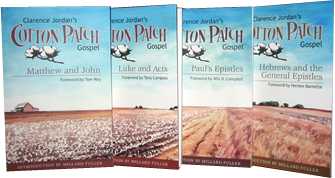
Partners. The new edition of these four books (with new forewords
by Tom Key, Tony Campolo, Will Campbell, and Henlee Barnett) is also
available from Smyth
& Hylwys. To purchase ebook versions, see
Amazon (Kindle),
Barnes & Noble (Nook), and
Apple (ibooks apps for Ipad and Ipod).
This page was last updated on
05/29/12
.
|
|||||||||||||||||||||||||||||||||||||